Blessed Be! Our next sabbat of Mabon will be on September 20th, 2026!
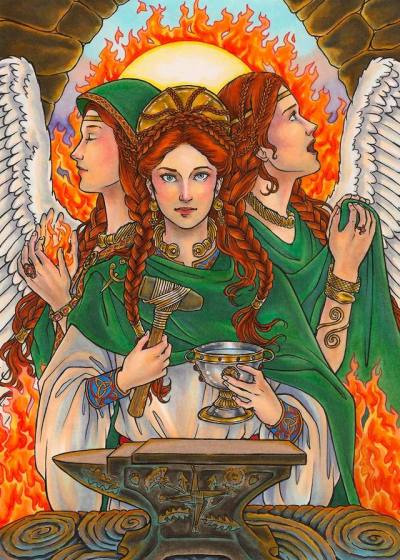
Upcoming after January is Imbolc, also known as Candlemas or Brigid’s Day, is a pagan sabbat that marks the halfway point between the Winter Solstice and the Spring Equinox. This festival is dedicated to the goddess Brigid, who is associated with fire, fertility, healing, poetry and smith craft. Imbolc is a time for renewal, purification, and making plans for the coming year. Imbolc appears of the Wheel of the Year after Yule and before Ostara. For some, it may be considered the beginning of the year, as it is the first sabbat that appears in the new year. For some others, Yule may be considered the new year, as the birth of the rising sun happens during this time.
Imbolc in the Northern Hemisphere falls between the 1st and 2nd of February; in the Southern Hemisphere, it is on the 1st or 2nd of August
One of the traditional ways to celebrate Imbolc is by lighting candles and making offerings to Brigid. This can be done by creating a small altar with a white candle, a bowl of milk, and a sheaf of wheat. The candle represents the return of light and the growing strength of the sun, while the milk and wheat symbolize fertility and abundance. You can also create a Brigid’s cross using reeds or straw to represent the goddess.
Another way to celebrate Imbolc is by performing a purification ritual. This can be done by taking a bath or shower, using special herbs such as rosemary or bay, and visualizing yourself being cleansed of any negative energy. You can also create a special potion or oil to use during the ritual.
Imbolc is also a time to honor the goddess Brigid by making something creative. This could be writing poetry, making art, or even cooking a special meal. This is a great time to reflect on your goals and aspirations for the coming year, and to make plans to achieve them.
The goddess Brigid is an ancient deity from Irish and Celtic beliefs and her origins date back to pre-Christian times. The exact age of the goddess is not known, but she is believed to have been worshiped for thousands of years.
There are several figures in other cultures that share similarities with Brigid.
In ancient Roman religion, there is a goddess named Vesta who is also associated with fire and the hearth.
In ancient Greek religion, there is a goddess named Hestia who is also associated with the hearth and home.
In ancient Slavic mythology, there is a goddess named Svarog, who is associated with fire and blacksmithing.
In ancient Welsh mythology, there is a goddess named Blodeuwedd, who is associated with flowers, poetry and wisdom.
In ancient Hindu religion, there is a goddess named Agni, who is associated with fire and the home.
All of these figures share similarities with Brigid in that they are associated with fire and home, as well as other elements like poetry and wisdom.
Imbolc is a festival traditionally celebrated by the Celtic people, specifically the Irish, but other cultures have similar celebrations around the same time of year. For example, in ancient Rome, the festival of Lupercalia was celebrated around February 15th and was a celebration of purification and fertility. In some Eastern European cultures, the festival of Koliada is celebrated around the same time and is a celebration of the return of light and the arrival of spring. In Hindu culture, the festival of Vasant Panchami is celebrated around the same time and is a celebration of the coming of spring.
Imbolc is a powerful and meaningful sabbat that offers an opportunity to honor the goddess Brigid and to celebrate the return of light and the coming of spring. It also has deep roots in tradition and celebration all around the world
Imbolc
Connect
Reach out with questions or insights. luciddreamer@covenradiantmoon.org
Bright Blessings!
As Above, So Below
© 2026. All rights reserved.