Blessed Be! Our next sabbat of Mabon will be on September 20th, 2026!
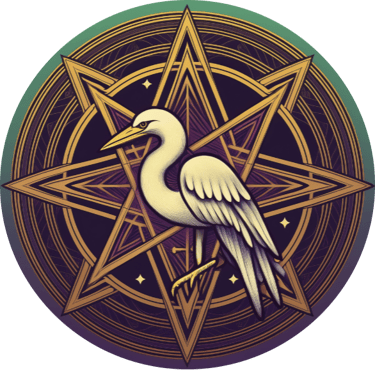
The Summerland
A Place Remembered Between the Worlds
by Bianca Anaya
6/10/20264 min read
My post content
There are certain ideas in Wicca that seem so natural to the religion that it is easy to assume they have always been there. The Wheel of the Year, the reverence for the Goddess and the God, the sanctity of nature—and for many of us, the belief in the Summerland.
When I first heard the word Summerland, it felt immediately familiar. It painted a picture of a peaceful landscape beyond the veil, where our loved ones are welcomed home, where the soul finds rest before beginning another journey through the great cycle of life, death, and rebirth. It was never presented to me as a place of reward or punishment. Instead, it was spoken of as a place of healing.
Yet, as my years of study have taught me, many things that feel ancient are sometimes much younger than we imagine. That realization has never diminished my faith. Rather, it has deepened it.
Searching for the Summerland
One of the great joys of studying religion is discovering that spiritual traditions are living things. They grow, adapt, borrow, remember, and sometimes reinvent themselves. Wicca is no exception.
Unlike concepts such as the Egyptian Duat, the Greek Elysian Fields, or the Norse Valhalla, there is no surviving evidence that an ancient pan-European pagan religion taught of a place specifically called the Summerland. The name itself does not appear in the surviving literature of pre-Christian Celtic religion.
Instead, when we look through early Wiccan history, we find that the Summerland emerged as part of the development of modern Wiccan theology during the twentieth century. Gerald Gardner introduced Wicca to the public in the 1950s, and while reincarnation was an important element of his tradition, the detailed picture of the Summerland evolved gradually through the writings and experiences of early Wiccans rather than appearing fully formed in the earliest public texts.
That may surprise some readers, and at the time when still studying in my earlier days of learning the Craft, it did me. Since then I have come to learn a simple truth: living religions are not weakened by growth. They are often strengthened by it.
Echoes from Older Traditions
Although the word Summerland is modern, the longing it expresses is ancient. Nearly every civilization has imagined a peaceful realm beyond death.The Egyptians envisioned the Field of Reeds, the Greeks imagined the Elysian Fields, and the Celts told stories of the Otherworld—places like Tír na nÓg and Emain Ablach, realms of beauty, abundance, and timelessness. None of these places are identical to the Wiccan Summerland, yet each speaks to a common human hope: that death is not an ending, but a doorway.
I have become less interested in proving that one tradition borrowed from another than in understanding why so many cultures dreamed similar dreams. Human beings have always stood beneath the stars, buried their dead with reverence, and wondered whether love survives beyond the grave.
Perhaps the Summerland is one more expression of that timeless question.
The Influence of Spiritualism
There is another chapter to this story that deserves attention.
During the nineteenth century, Spiritualism became enormously influential throughout Britain and America. Ideas about communication with the dead, spirit progression, and peaceful realms beyond physical life entered popular religious imagination. The term "Summerland" itself was already being used within Spiritualist circles long before it became familiar to Wiccans, describing a beautiful realm where souls continued to learn and grow after death.
Modern Wicca did not simply copy Spiritualism, but it developed in a cultural landscape where these ideas were already well known. Like many modern religions, Wicca emerged through conversation with the world around it, drawing from folklore, ceremonial magic, comparative mythology, and contemporary spiritual movements while shaping something distinctly its own.
Becoming Part of Wiccan Thought
As Wicca matured through the work of Gerald Gardner, Doreen Valiente, Raymond Buckland, Scott Cunningham, and many others, the Summerland gradually became one of the most widely accepted ways of understanding what lies beyond this life. What is remarkable is that no central authority declared it to be doctrine.There was no council, no creed, and no official proclamation. Instead, the idea spread because it resonated with practitioners. That, to me, says something profound about Wicca itself.
Unlike many religions that define orthodoxy through fixed theological statements, Wicca has often grown through shared experience, poetry, ritual, and reflection. Doreen Valiente, whose work helped shape much of early Gardnerian liturgy, exemplified this creative yet thoughtful approach to developing Wiccan practice.
What the Summerland Means to Me
When people ask whether I believe the Summerland literally exists, I find myself returning to a different question: What does the belief ask of us? It asks us not to fear death; it asks us to see life as a sacred cycle rather than a single destination; it asks us to trust that love is not so fragile that it can be erased by the closing of mortal eyes. Whether the Summerland is an objective spiritual realm, a symbolic landscape of the soul, or something our human language can only imperfectly describe, I cannot say with certainty. I have grown comfortable with not knowing, because my practice, for me, has never meant possessing every answer. It has meant walking curiously toward mystery.
A Living Tradition
One of the greatest gifts Wicca has given me is permission to continue learning. If the Summerland developed through the lives, experiences, and reflections of modern witches, that does not make it less meaningful. It reminds me that the craft is not only inherited; passed down from those who came before us, it is also created, nurtured, and lovingly tended by those who practice it. Just as forests grow one season at a time, traditions grow one generation at a time. Perhaps that is the true lesson of the Summerland. Not simply that there is life beyond death, but that hope itself has always been one of humanity's oldest companions, quietly blooming wherever people have dared to believe that love continues its journey beyond the horizon.
Suggested Reading
HISTORY: Wicca Overview
The Doreen Valiente Foundation
Cambridge University Press – Gerald Gardner and the Creation of Wicca
Recommended Books
Ronald Hutton — The Triumph of the Moon
Philip Heselton — Witchfather
Doreen Valiente — The Rebirth of Witchcraft
Gerald Gardner — Witchcraft Today
Gerald Gardner — The Meaning of Witchcraft
These works provide valuable historical context for the development of modern Wicca and the emergence of many of its theological ideas, including beliefs about reincarnation, the afterlife, and the evolving concept of the Summerland.
Connect
Reach out with questions or insights. luciddreamer@covenradiantmoon.org
Bright Blessings!
As Above, So Below
© 2026. All rights reserved.